Five speakers came together at Time to Help’s panel this week to confront the barriers menstrual health poses to education and dignity around the world. Between them, they covered community-based intervention, legislative reform, humanitarian infrastructure, grassroots education, and frontline medical experience.
The panellists were requested to draw on their own personal, professional and academic experiences to tackle the following questions:
- Where does period poverty stigma come from; what are the biggest barriers when tackling this stigma in day-to-day life?
- What practical steps can organisations take to normalise this conversation?
- What does genuine bottom-up change look like, and how do organisations avoid imposing solutions on the communities they serve?
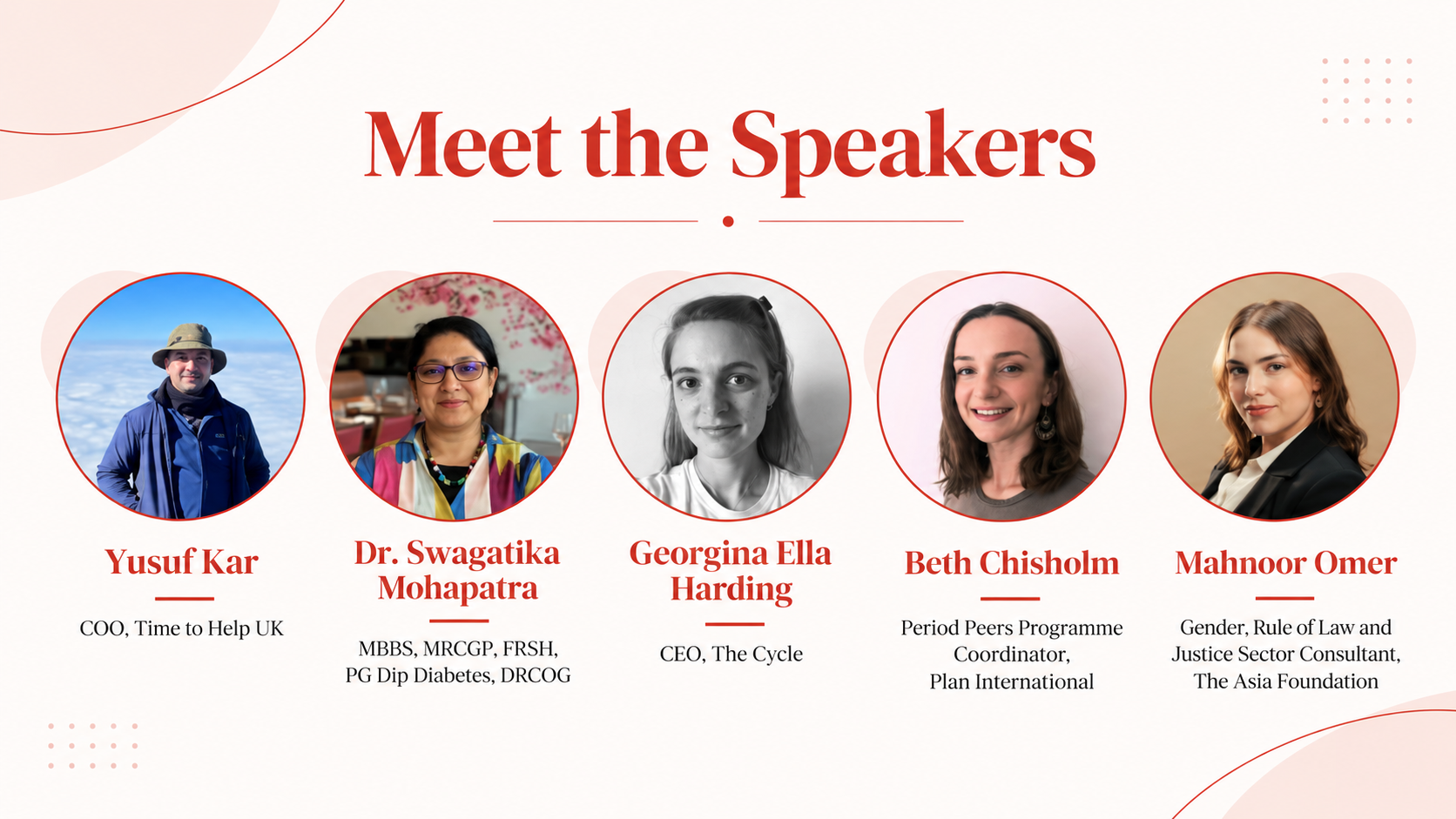
Yusuf Kar – Engaging Men and Building Sustainable Support
Yusuf Kar, COO of Time to Help UK, was the first speaker, opening with his work engaging men in leadership roles as allies in menstrual health education.
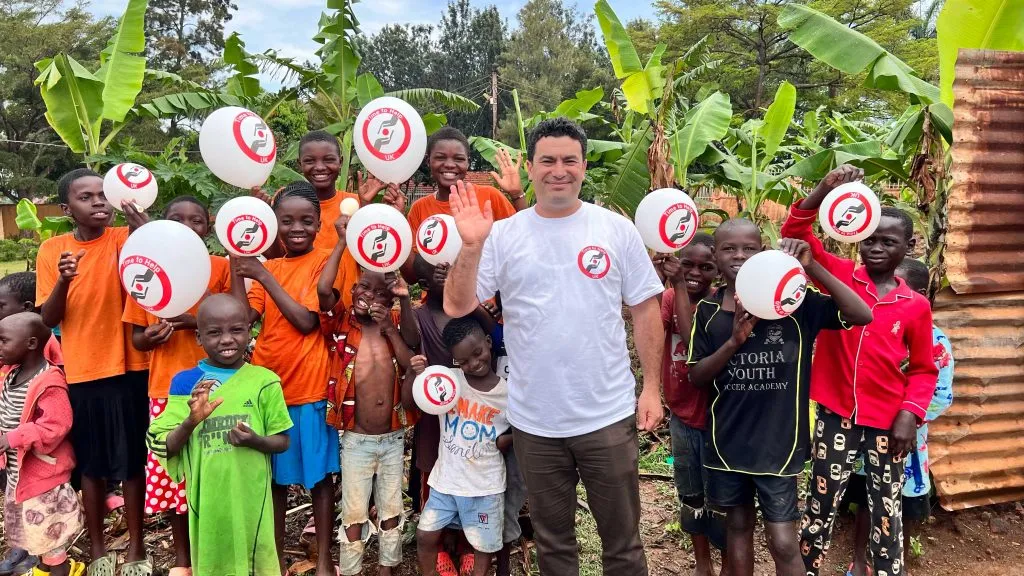
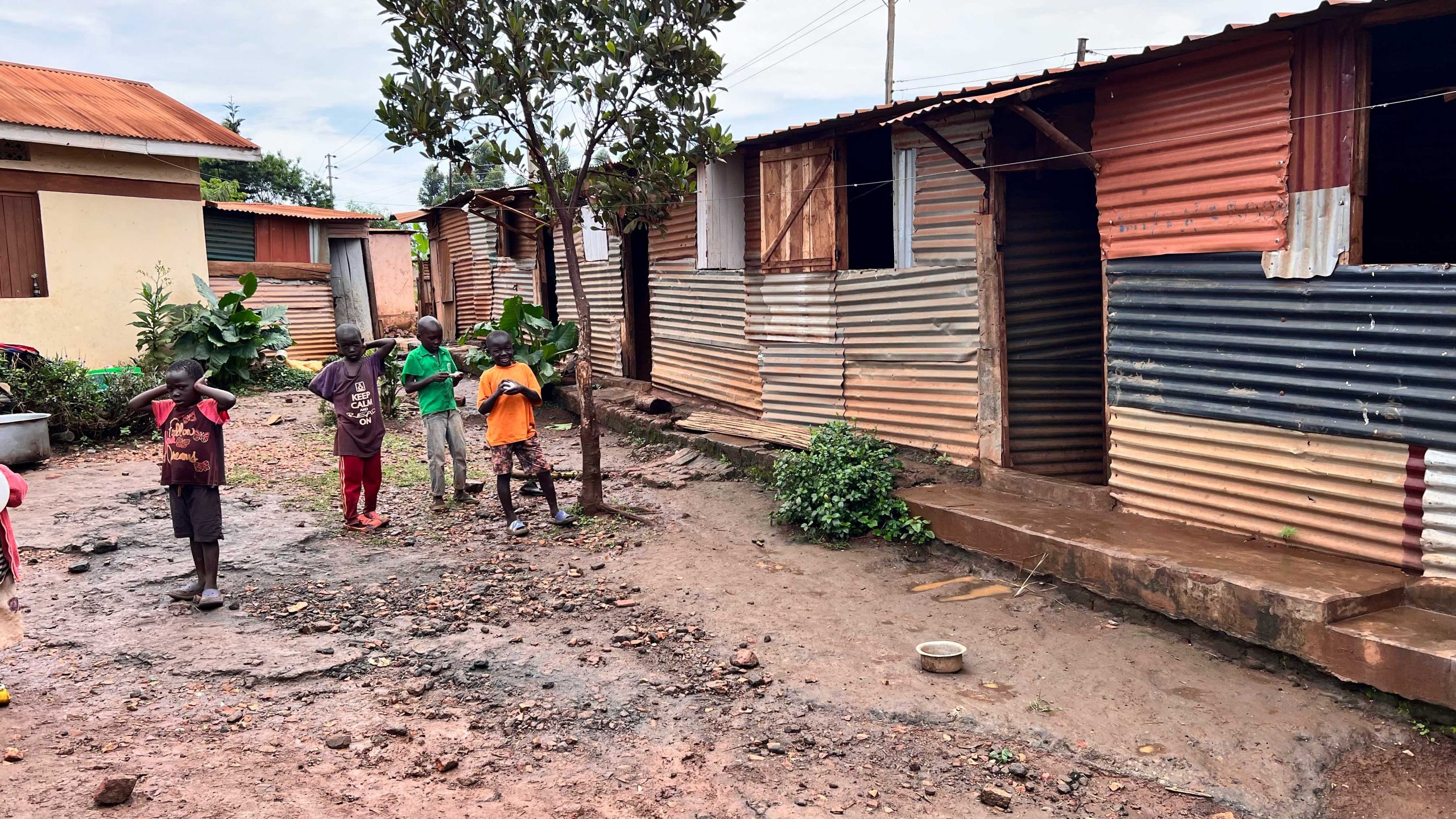
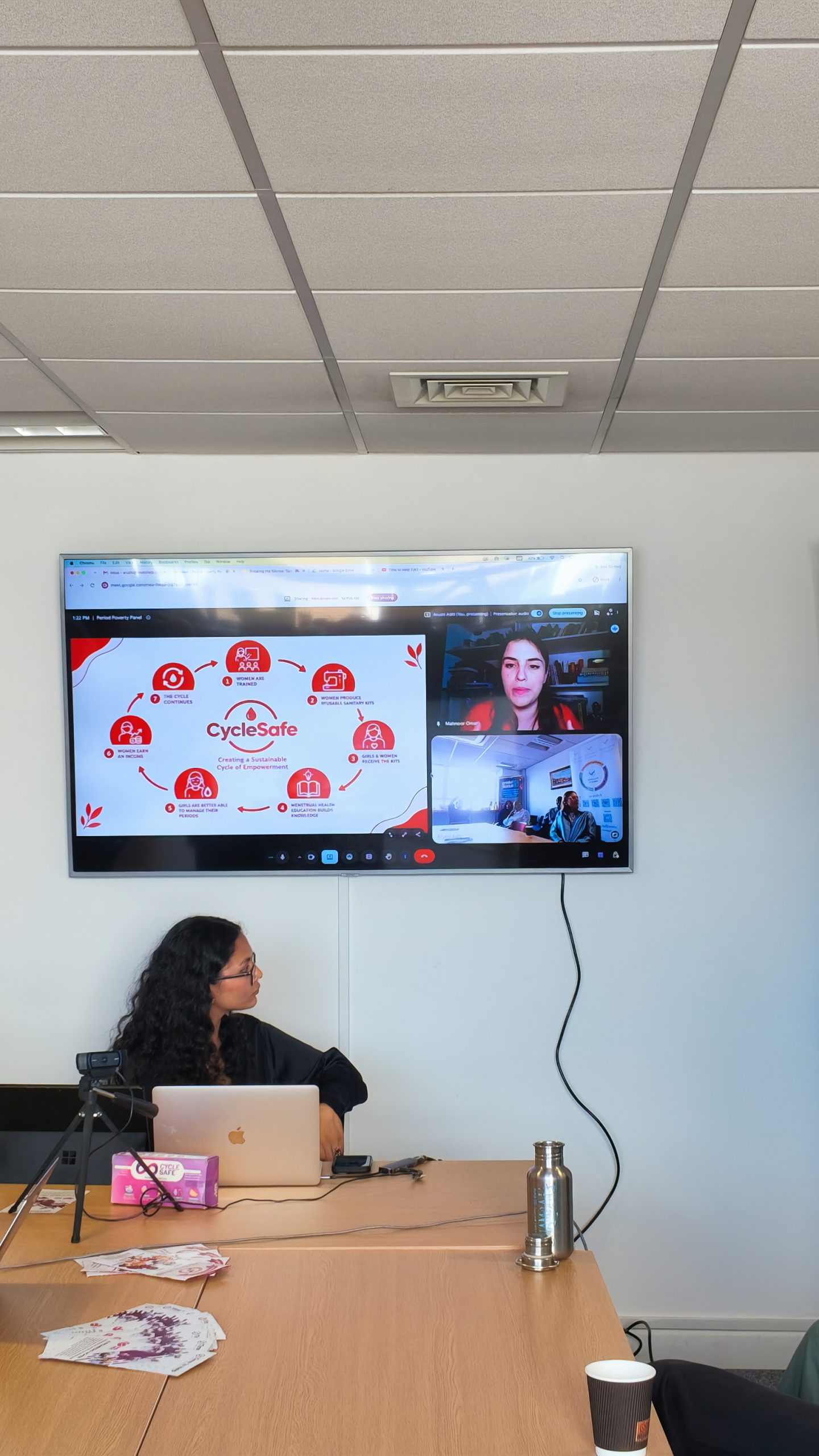
He outlined Cyclesafe’s own approach, which pairs tailoring classes with the distribution of reusable pads, alongside informative health sessions for young children, aiming to build a sustainable cycle of access rather than a one-time fix.
Mahnoor Omer – Turning Advocacy Into Legislative Change
Mahnoor Omer followed with the story of her campaign against period product taxation in Pakistan, a fight that ultimately changed the law and earned her recognition as a TIME Woman of the Year.
She pointed to youth-driven pressure and social media as the forces that pushed the issue into the political mainstream, showing how digital advocacy can translate into real legislative wins.
Georgina – Menstrual Health, WASH and Sustainability
Georgina, CEO of The Cycle, brought a WASH (water, sanitation and hygiene) perspective, drawing on research connecting menstrual health to climate change and sustainability.
She noted that long-standing funder relationships help provide some stability in that uncertain environment.
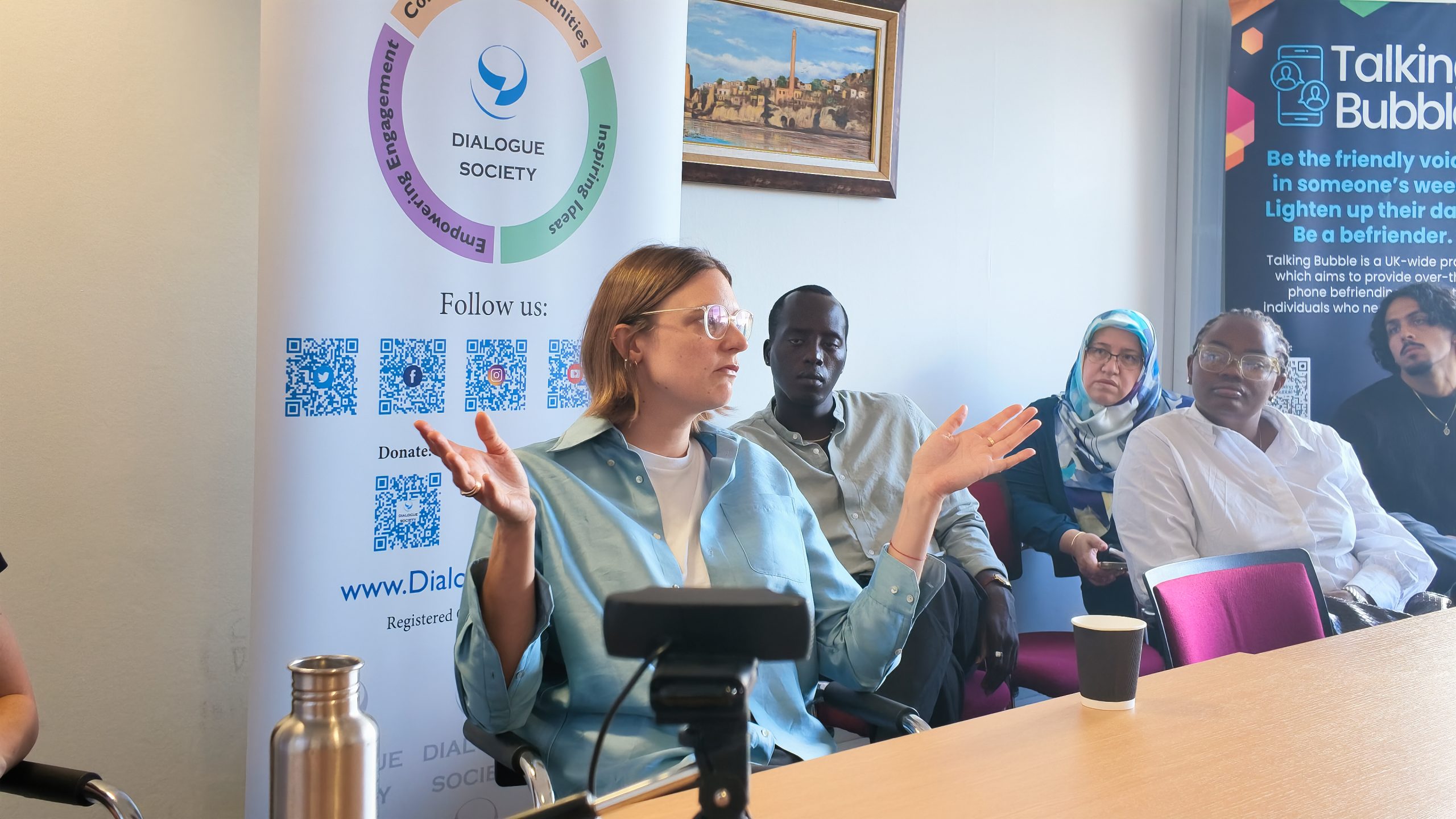
Beth – Breaking Generational Cycles of Stigma
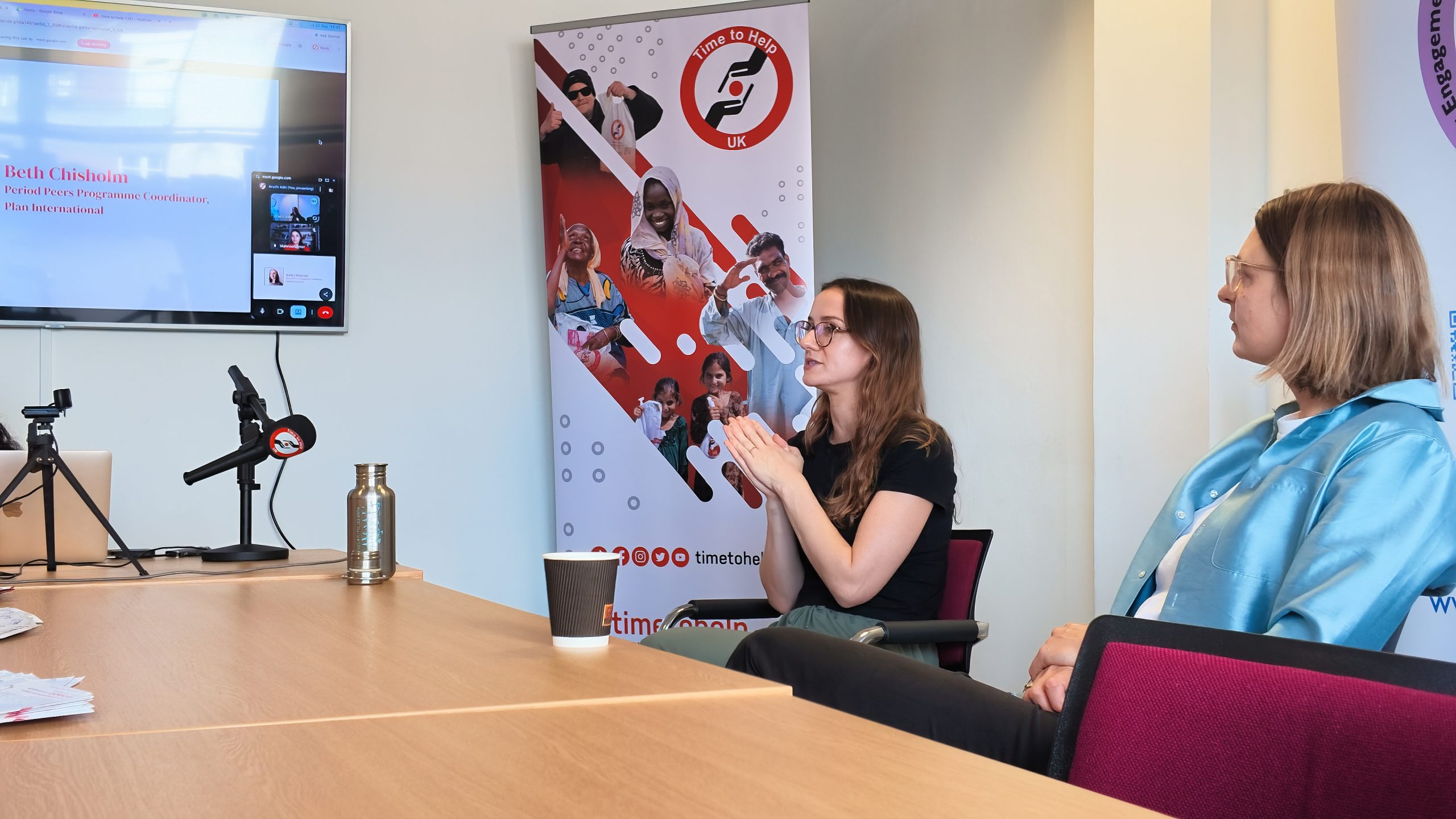
Beth, from Plan International, talked about the organisation’s Period Peers programme, which focuses on educating young people to break generational cycles of stigma.
She raised a question that shaped much of the discussion: how can conversations led by young people themselves help build more culturally inclusive, destigmatised attitudes toward menstruation?
Swagatika – The Health Impact of Period Poverty
Swagatika closed the panel, speaking from her own experience as a healthcare professional who has witnessed period poverty firsthand.
She described the real health consequences of inadequate hygiene access, including infections caused by a lack of proper products, and the small but telling indignities that persist, like women hiding pads in brown paper bags.
Our Plan of Action
As a result of this discussion, our plan of action is to utilise the tangible insights shared to modify and expand our work through the Cyclesafe initiative:
- Create a tracking system that allows us to keep track of our resource facilitation and impact statistics through the different parts of the initiative
- Finish the creation of the data-driven Cyclesafe website, making the evidence and impact legible to donors, schools, and local government at a glance
- Divert energy into the educational sessions provided alongside pad distribution, through which we encourage discussion about destigmatising periods
- Find and build relationships with private and corporate funders that allow us to expand our work with WASH facilities provision, possibly in the countries where we work as well
- Encourage advocacy around the issue through social media and more events like this
Alongside academic input from professors who have agreed to contribute, we are planning to create a policy proposal that entails several expansions to our initiative, taking account of the perspectives shared during this discussion.
A Multidisciplinary Approach to Period Poverty
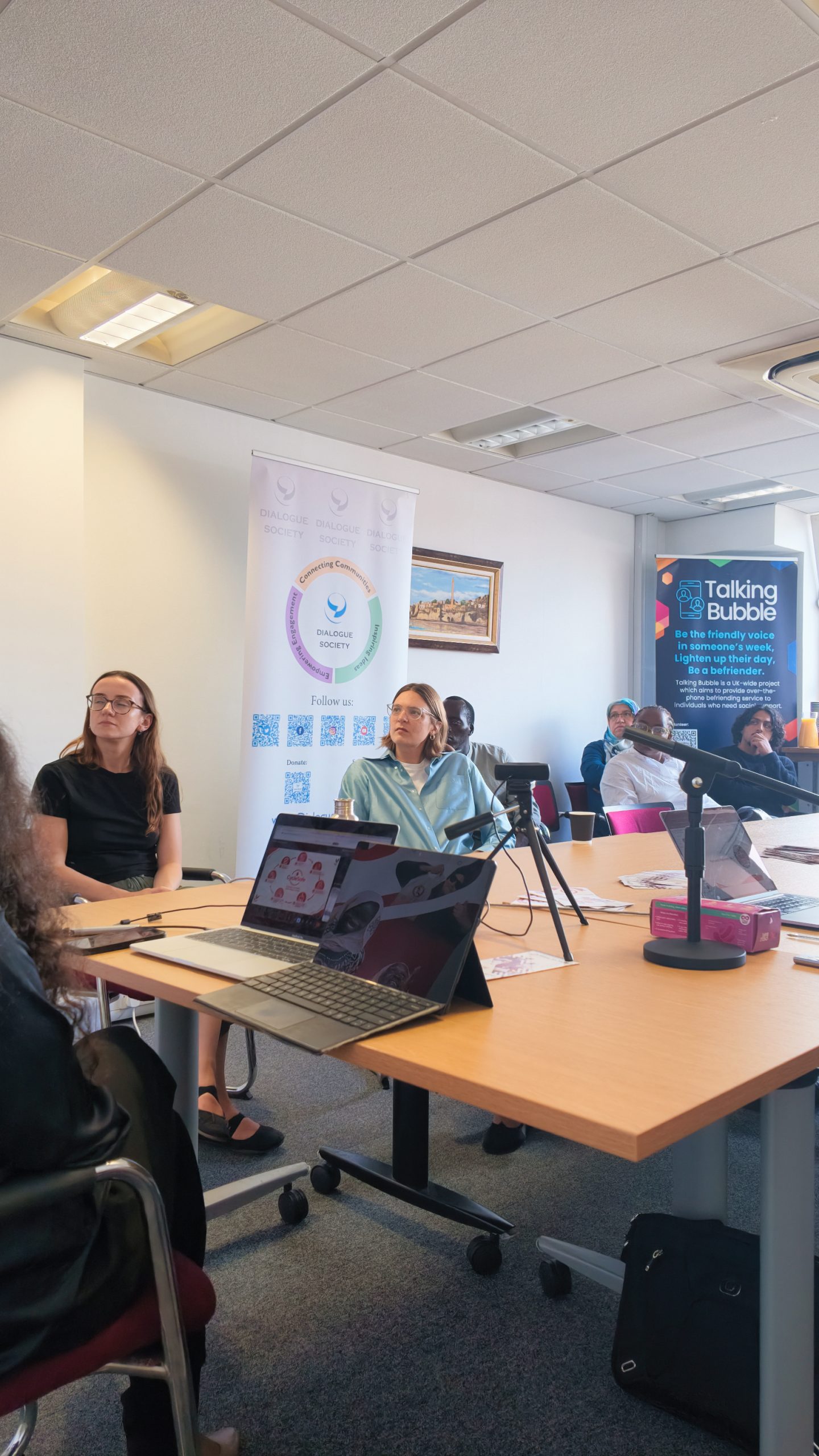
While we merely scratched the surface through this in-depth discussion, the most essential takeaway was exploring the multidisciplinary nature of the issue.
This could be seen through the organisation-based, legislative, medical and academic perspectives brought to the table.
There are many layers to period poverty, from stigma and education to resource facilitation. This conversation allowed speakers and participants to engage in a discussion that gave every aspect of the issue the attention it deserves.